Not by name, although UK workplace rules require employers to keep a reasonable working temperature for staff. However, no law names air conditioning specifically or sets one fixed maximum. Extraction alone often cannot meet that duty, since it clears fumes and steam rather than cooling the room. A kitchen that regularly leaves staff struggling to work still needs addressing.
Extraction moves air. It doesn’t always cool it
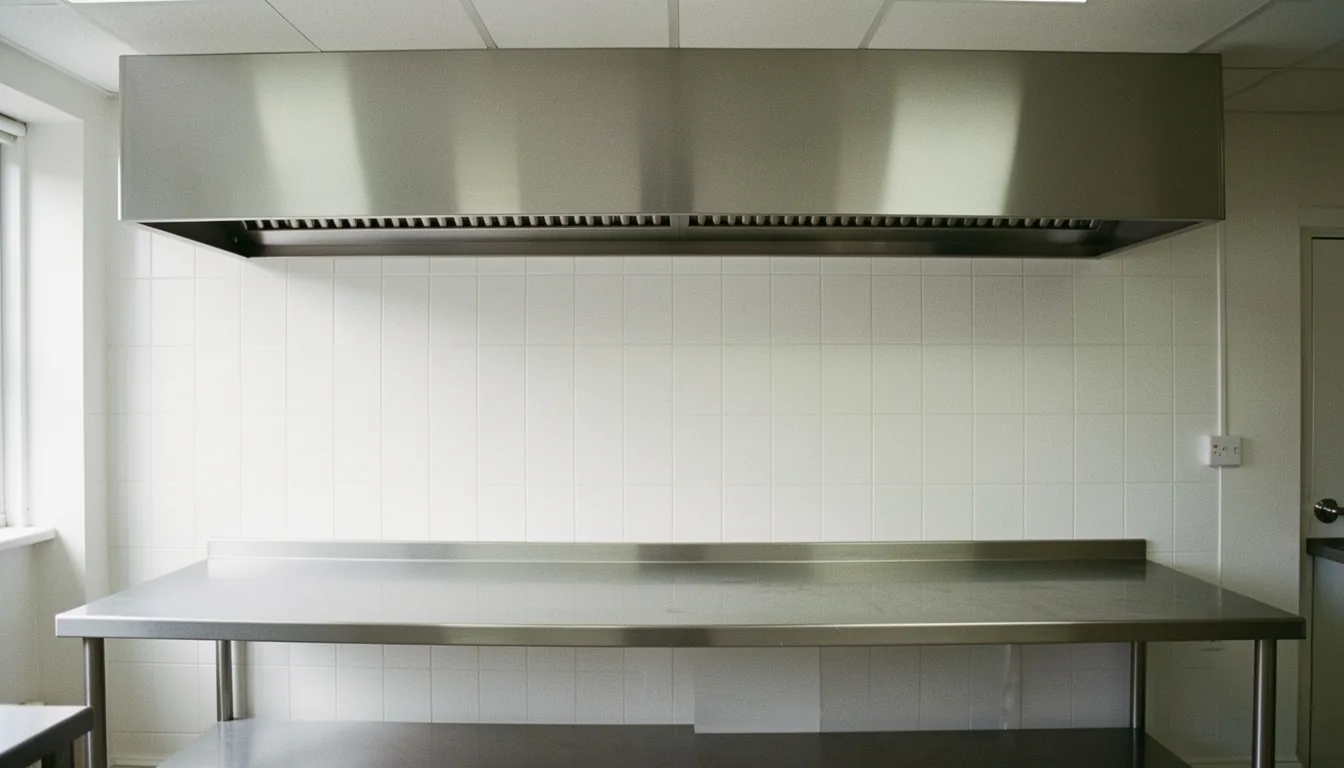
A commercial kitchen already pulls hot air, steam and cooking fumes out through a canopy above the line. That system clears fumes well. It was never built to bring the whole room down to a comfortable heat. On a warm day, a busy kitchen can still feel too hot, even with extraction running flat out.
A duty, not a fixed number
UK workplace rules give employers a duty to keep a reasonable working temperature for staff. Still, no single legal maximum sits inside that duty. Each space gets judged on its own, not against one fixed number. A kitchen that regularly leaves staff struggling is still a real safety issue an employer must fix.
That duty sits alongside food-hygiene and fire rules that already cover a commercial kitchen. None of these rules names air conditioning by name as required. Instead, the real test is simple: does the space stay workable once extraction and equipment heat both get counted in? For anything genuinely in dispute, an environmental health officer is the right person to ask.
Cooling alongside extraction and make-up air
Extraction pulls hot, fume-laden air out from above the cooking line, while make-up air then replaces that lost volume. It usually comes in from elsewhere in the building, or straight from outside. Cooling has to work alongside both of these, not against them.
A cooling unit placed badly can end up losing its own air straight back out through the extraction. That wastes most of its effect before it even reaches the room. A well-planned kitchen keeps cooling clear of the canopy’s direct pull instead. That way, the two systems work with each other, not against each other.
Raise that layout early when planning commercial air conditioning in Cheltenham around a kitchen.
Grease, hygiene and the right kind of unit
A kitchen is harsher on equipment than an office ever is. Grease and steam both travel further than the cooking line itself. Because of that, a unit near food prep needs its own spec, not a standard office unit dropped into the wrong setting.
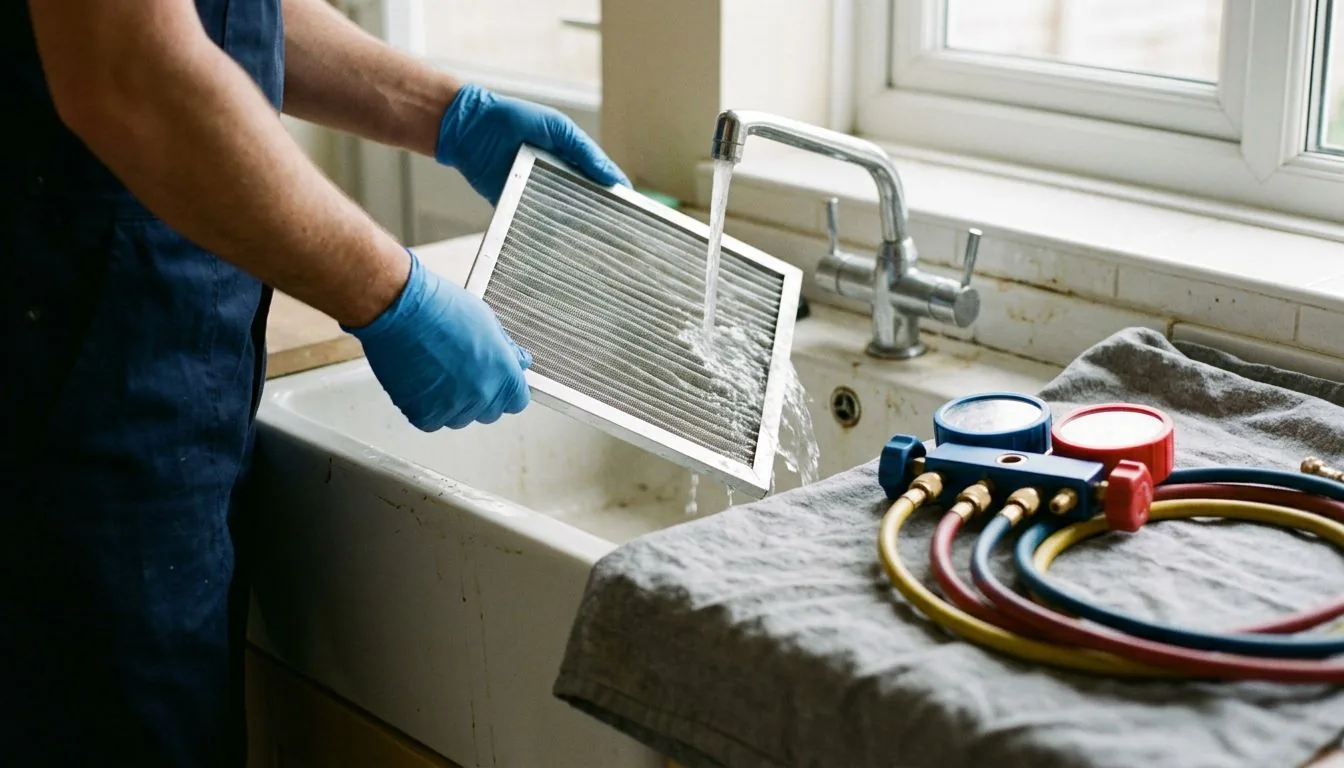
Filters and coils also need easier access for cleaning. A kitchen’s own cleaning schedule runs more often than an office’s, since grease builds up fast near a working line. A unit that is awkward to reach quickly becomes a maintenance headache. Ask an installer how often a kitchen-rated unit needs its filters checked, since that gap is usually shorter than an office needs.
Put the same access question to anyone quoting for commercial air conditioning in Bath near a working kitchen.
Planning for a kitchen on business premises
Planning is worth checking early on business premises. A listed building, a conservation area or a shared unit in a row of shops can each change the answer.
Always check with your council before you settle on a spot for the outdoor unit. That matters most on a building anyone else might object to. A kitchen extension or a rear yard often gives more room to work with than a shopfront does.
Front of house is a different problem again
A kitchen and a dining room rarely share one cooling plan, since the two spaces work in very different ways. The kitchen carries the heat load: ovens, fryers and a full extraction system running hard.
Front of house carries a different load instead. That load comes mainly from seated customers and how much glazing lets sunlight in. For why business premises get sized differently, read commercial versus domestic air conditioning.
Treating both spaces as one zone usually serves neither well. A single setting either leaves the kitchen too hot for staff or over-cools a dining room that customers find genuinely cold. Splitting the two into separate zones lets each area run at the temperature that actually suits the work happening in it.
Timing installs and servicing around trade
A working kitchen rarely has a quiet week to hand over for building work. Because of that, most installs and services get planned around closed hours instead. A slower trading day works too, rather than a lunch or dinner service. A short closure window still beats losing a full trading day.
Servicing matters more here than in most commercial settings, too. Grease and steam build up faster near a cooking line than almost anywhere else. A kitchen unit left unchecked for too long can lose performance quickly as a result.
A tighter service interval, agreed with the installer at the start, keeps that risk in check. The same tighter schedule applies to commercial air conditioning in Taunton kitchens, where trading hours shape when a visit can happen.
What this means for your enquiry
Does your kitchen struggle to stay workable once the extraction is already running? Tell us the type of premises, and roughly how the space gets used. Our commercial air conditioning service covers kitchens alongside offices and shops. Our Exeter coverage page covers business premises in the city.
One enquiry puts you in touch with one pre-qualified installer for this job. It is free, with no obligation.
Send the details through the contact page, including how the kitchen is laid out and how the extraction runs. The installer we put you in touch with can then plan the cooling around it — get in touch.