A standard air conditioning service covers a filter clean, a coil check, a drain clean and checks of the refrigerant and wiring. UK rules add an F-Gas leak check only above a set refrigerant charge. Domestic and commercial visits share that same core checklist. Scope and frequency are what change.
What a standard service covers
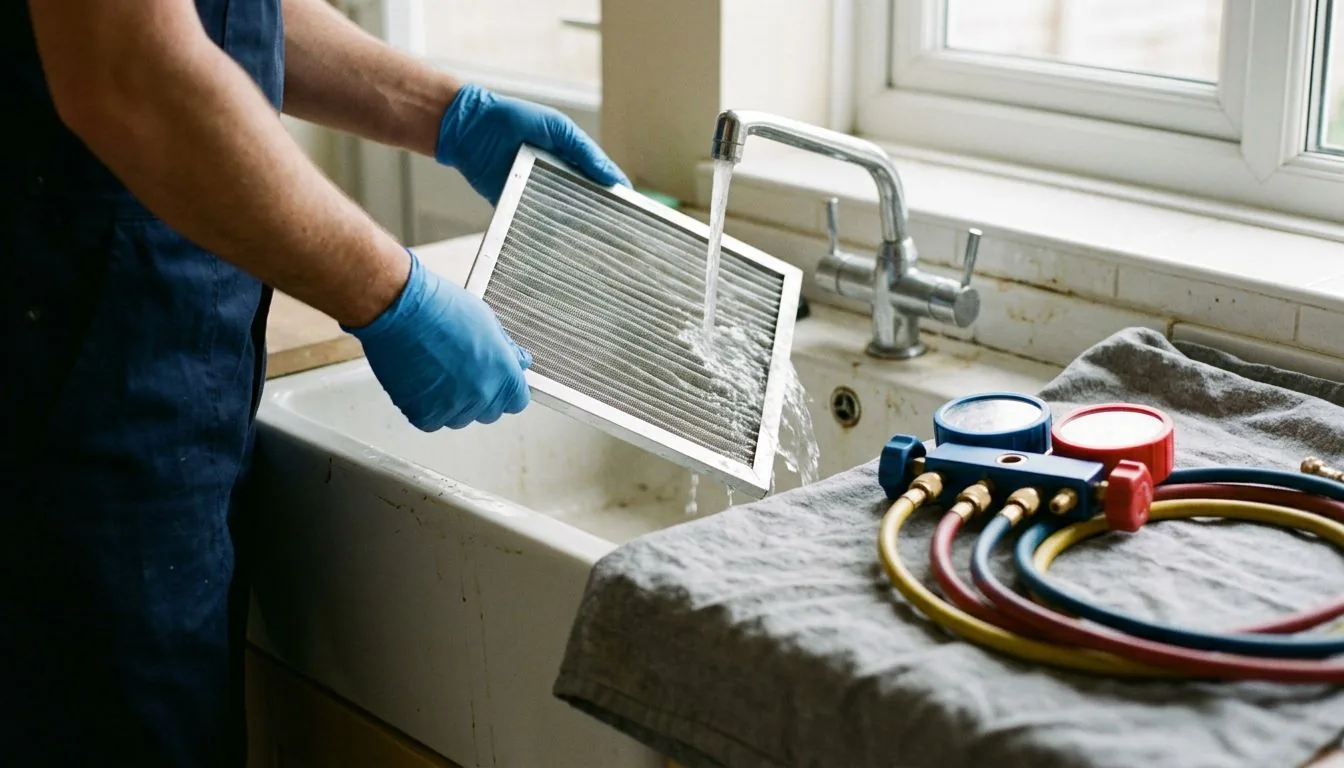
A service visit starts with the filter. According to Daikin, dirty or blocked filters reduce airflow, so the system works harder and uses more energy. The engineer cleans the filter or replaces it before moving on.
Next come the coils, both indoor and outdoor. Bent coil fins restrict airflow, so Daikin’s service list includes straightening them. As a result, the engineer checks both sides of the system.
In addition, the engineer cleans and inspects the condensate drain. A clogged drain is a common cause of water dripping around the indoor unit. Clearing it at a service helps prevent that.
The visit then finishes with two final checks. One measures the refrigerant level and adjusts it where needed. The other inspects the electrical connections and tightens any that need it.
Only an engineer with the right F-Gas qualification may legally work on the refrigerant circuit. What qualifications an air conditioning engineer needs sets out why. So ask to see that certificate, whatever the size of the job.
The F-Gas leak-check duty, and when it applies
However, not every visit is identical. UK F-Gas rules add a duty above a set refrigerant charge. A system holding the equivalent of 5 to under 50 tonnes of carbon dioxide needs a leak check.
That check is due at least every 12 months. From 50 to under 500 tonnes, it falls due at least every six months instead. For R410A, a common refrigerant, GOV.UK puts 5 tonnes at 2.4kg of gas. Therefore, check the charge on your unit’s label to see where it sits.
However, where it does apply, the leak check sits alongside the routine items above. It does not replace them. In England and Wales, a system with an effective rated output above 12kW also needs a separate inspection. An energy assessor carries this out, at intervals of no more than five years.
Domestic vs commercial: what changes
The checklist itself does not change between a home and a business address. What changes is how often a visit is needed. Daikin advises a professional service at least once a year, ideally in spring before it gets hot.
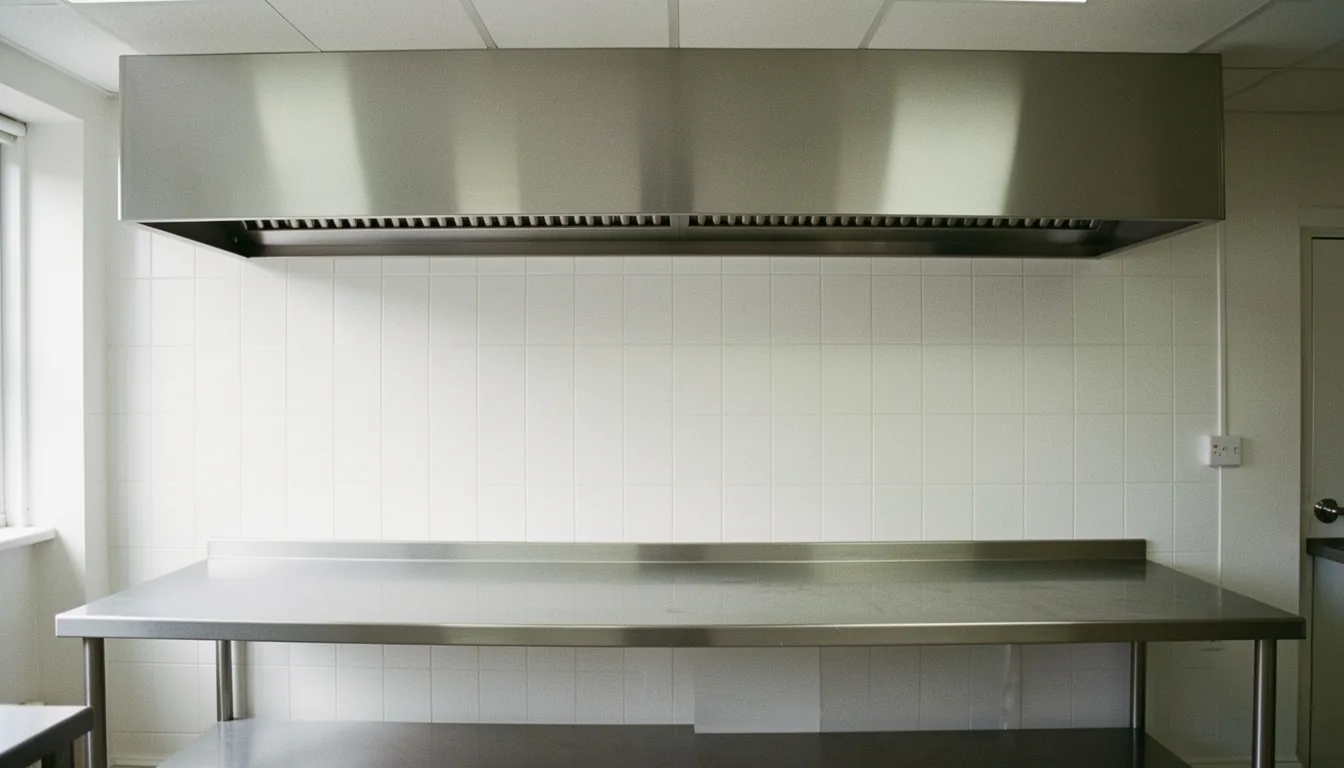
A commercial system can need more attention. Daikin notes that systems in dusty or coastal settings may need more checks. A kitchen’s airborne grease puts a similar load on filters and coils.
Consequently, it is worth asking whether one visit a year is enough for a busy site. Some buildings with several units use a maintenance contract instead, spreading planned visits across the year.
A building with mixed uses can even need two schedules under one roof. For example, a home with a let annexe counts. That is worth flagging to the engineer rather than assuming one visit covers both halves of the property. The same question about use applies to maintenance visits in Plymouth, whatever the building type.
Signs a service caught a problem early
A good service visit can find something small before it becomes a larger job. For example, a dirty filter found at a service is simply cleaned or replaced. Left alone, it keeps cutting airflow and pushes up energy use.
Similarly, a drain cleared at a service is less likely to clog. A clogged drain is what leaves water dripping around the indoor unit.
Likewise, a refrigerant pressure reading outside the normal range is an early flag. The leak-checking rules treat that as a sign of a possible leak, which then needs a direct test. What happens if a service gets skipped sets out what tends to follow when checks slip.
How this differs from a repair visit
A service follows a plan. It happens whether or not anything feels wrong, because its job is to catch problems early. A repair call works differently: something has already stopped working, or is behaving oddly, and that triggers the call.
The two can still meet in the middle. If a service finds a refrigerant leak, the F-Gas rules require a repair as soon as possible. The engineer then rechecks that repair within a month.
Anyone unsure which one they need can start with our checks before calling out an engineer. It covers what is worth checking yourself first, before you book any visit.
What to ask when booking
First, a short conversation before the visit sets clear expectations. Ask if the price covers a filter replacement, should one be needed, or a clean alone. Also ask whether the engineer charges parts separately, so there are no surprises.
Also ask if the visit records what it finds. That could be the refrigerant pressure reading, or the state of the coils. This record matters more than it sounds. For instance, Daikin says its warranty is only valid with annual maintenance, and it may ask for proof. Keep a written note from each visit, in case a warranty claim ever needs it.
Finally, a larger building needs one more question. Confirm whether this visit includes the F-Gas leak check, or whether that gets booked separately. Ask whether the two can happen on the same day, rather than assuming.
Booking a service for your system
Our air conditioning servicing and maintenance service covers the South West, whether it is a first annual check or a commercial contract. That includes maintenance visits in Bristol and air conditioning servicing in Bournemouth.
One enquiry puts you in touch with one pre-qualified installer for this job. It is free, with no obligation.
Describe your system through our contact page. The installer matched to your enquiry can then confirm exactly what your visit will cover — get in touch.