Air conditioning that has stopped working is not always a serious fault. Check the power, the breaker and the remote’s batteries and mode first. Then look at the filter and outdoor unit for an obvious blockage. If you notice a burning smell, sparking or a tripped breaker, call an F-Gas qualified engineer instead of trying again.
Start with what you can safely check yourself
Air conditioning that has stopped working is not always a serious fault. Sometimes the cause is something simple. No power, a wrong setting, or a blocked filter are common causes.
Each one is easy to check safely from the room the unit sits in. Working through a short checklist first can save a wasted visit, since it only takes a few minutes.
Power, breaker and remote
Check the unit has power before anything else. Look at the plug or the fused spur it runs from. Then check the circuit breaker in the consumer unit has not tripped.
A tripped breaker is common after a storm, or after several appliances draw power from the same circuit at once. Check it before booking air conditioning repair in Bournemouth, since a reset may be all it needs.
The remote deserves a proper look too. Flat batteries are a common cause of a unit that “does nothing” at all. Swap them, even if the remote’s own display still lights up faintly.
Confirm the mode setting as well. A remote left on fan-only mode, or set to heat instead of cool, can look identical to a genuine fault. Since this mix-up is so easy to make, it is always worth ruling out first. Only then is it worth assuming something more serious is wrong with the unit.
Filters and the outdoor unit
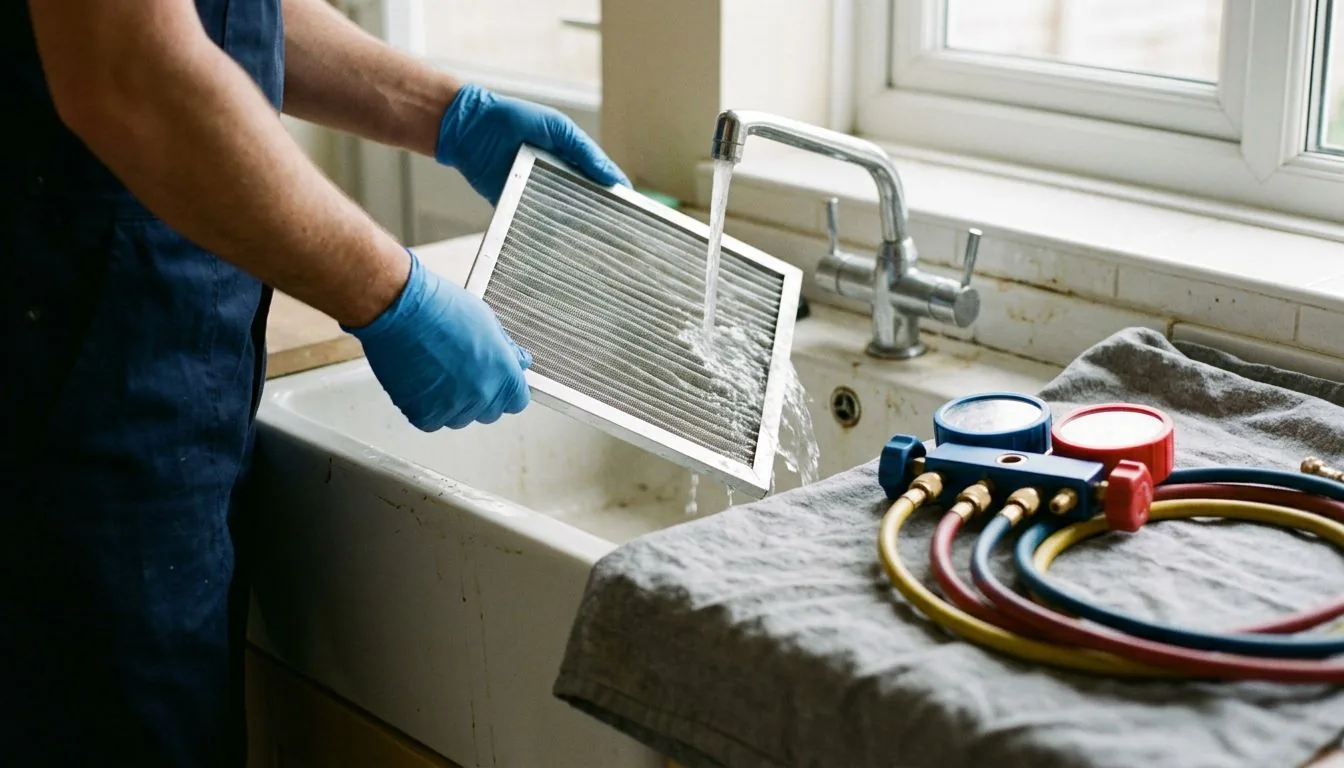
A blocked filter restricts airflow through the indoor unit. Many systems respond to this by shutting down as a safety measure, rather than running weakly. Cleaning or replacing the filter, then restarting the unit, can fix a “stopped working” case outright. It is worth ruling out before booking a repair in Swindon or anywhere nearby.
The outdoor unit is worth a look too, though only from a safe distance. Leaves, garden growth or built-up debris around it can restrict airflow enough to trigger a shutdown. Clearing an obvious blockage, then trying the system again, is a reasonable next step.
Never open the outdoor unit’s casing yourself. Whatever the fault turns out to be, that part of the job always belongs to a qualified engineer.
Sounds and smells worth paying attention to
A unit that hums but does not spin its outdoor fan is telling you something specific. That points toward an electrical or motor fault, not a simple blockage, and it is not worth waiting out. A grinding or rattling noise from either unit usually means a moving part. A fan blade or a bearing is a common cause, rather than a refrigerant fault.
A burning smell is different again. Never ignore it. Switch the system off at the wall, and treat it as an electrical fault rather than something to reset and retry. Since an electrical fault can be a genuine safety issue, this one symptom always needs an engineer straight away, without exception.
How long it is reasonable to wait
A simple fix, such as fresh batteries or a cleared filter, should bring a system back within minutes. If it does not, that is a useful signal on its own. A fault that resists an obvious fix rarely clears itself with more waiting.
Trying the same reset three or four times rarely helps, and it can delay a proper diagnosis. Although it is tempting to keep trying, a fault that survives one careful attempt is usually worth booking in rather than repeating. That is especially true once the weather is warm enough that cooling matters.
What genuinely needs an engineer
Some causes need an engineer to look, however carefully you check from outside. A refrigerant leak is one. The system loses its cooling gas gradually, and only an engineer with F-gas certification may legally repair it.
See why a system may need regassing for what that job involves. A failed compressor is another, since that is the unit’s core moving part and not something to open up at home.
Electrical faults sit in the same category. A unit that trips the breaker repeatedly, makes a burning smell, or sparks at the plug needs an engineer straight away. Do not attempt to reset it again.
These faults sit well beyond a simple checklist, and treating them as one risks real damage or a genuine safety hazard. That is true whether the call-out comes through our Poole repair page or from elsewhere across the South West.
A quick way to tell which camp you’re in
If the checks above bring the system back, the fault was probably simple, and you have likely avoided a call-out altogether. If the unit still does nothing, makes an unusual noise, or shuts down again shortly after restarting, something needs an engineer’s eye. That is worth arranging rather than trying the same reset again and again.
Write down what you tried, and what happened at each step, including the time of day and the weather. That detail helps an installer diagnose the fault faster once they look at it. It saves starting the same checklist again from scratch, and it gives them a clearer picture before they even arrive on site.
What this means for your enquiry
If your checklist has ruled out the simple causes, our air conditioning repair service can help from there. We check one enquiry, then pass it to one pre-qualified installer who covers your area and this kind of fault.
That holds across the South West, including repairing a system in Bristol. Our repair-or-replace guide is also worth a read once an engineer has confirmed what the actual fault is.
One enquiry puts you in touch with one pre-qualified installer for this job. It is free, with no obligation.
Describe what you tried, and what happened, through our contact page. The installer who replies can take it from there — get in touch.