Most home air conditioning needs a professional service once a year, ideally in spring before summer demand peaks. Busier settings need more. Commercial kitchens, offices and larger systems can require checks every six months, and a server room may need closer attention still. Daikin UK recommends that annual minimum for typical households.
The short answer
Most home split systems need servicing once a year, and Daikin UK advises at least that. A system that runs long hours, such as one in a busy office or a commercial kitchen, may need more. The right schedule comes down to how hard the system works, since that varies far more than the building type alone. Our guide to missed servicing covers what tends to go wrong when that schedule slips.
It is not a fixed rule for every building. Use type and running hours shape the real answer. The sections below set out a starting point for each.
A home split system
A typical household split system earns its keep across a handful of warm months. It does not run all year, unlike a system in a working office. One service a year, timed for spring, suits most homes well. Daikin UK suggests spring, before it gets hot, or autumn.
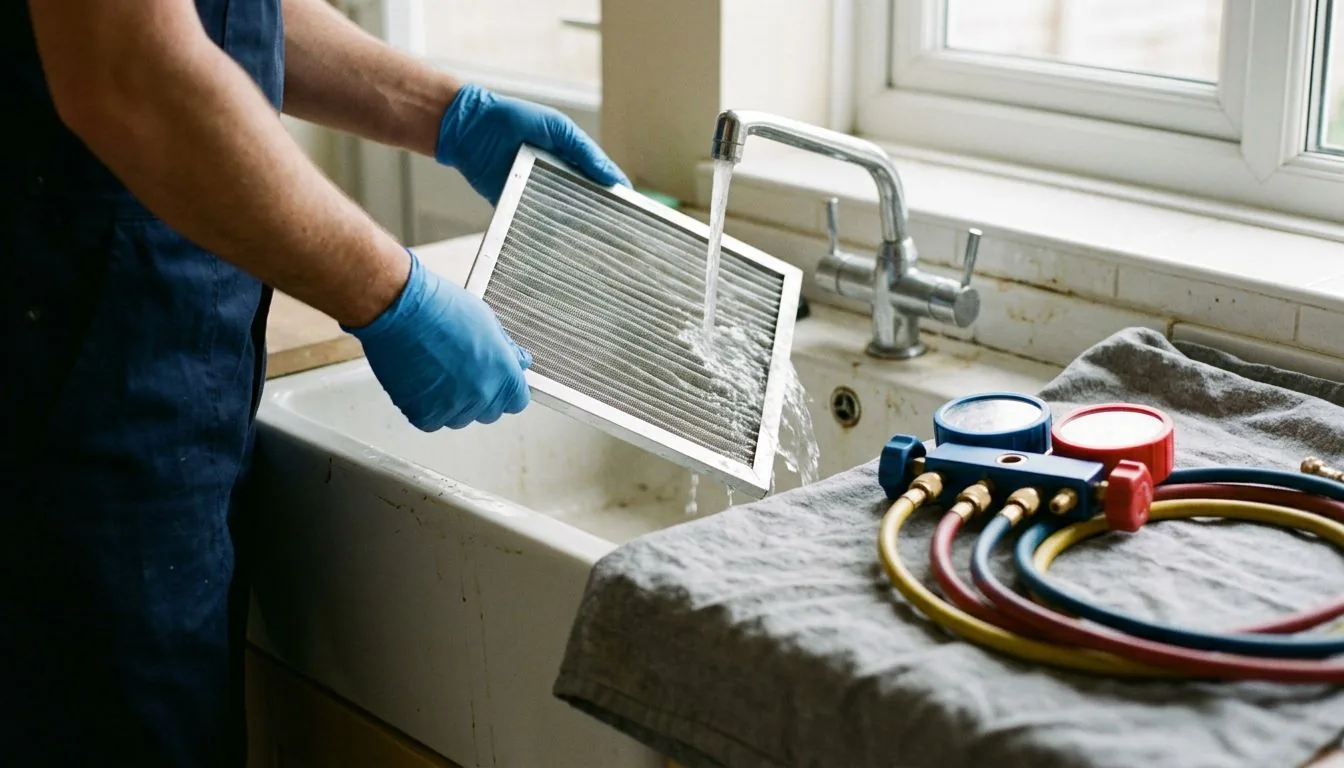
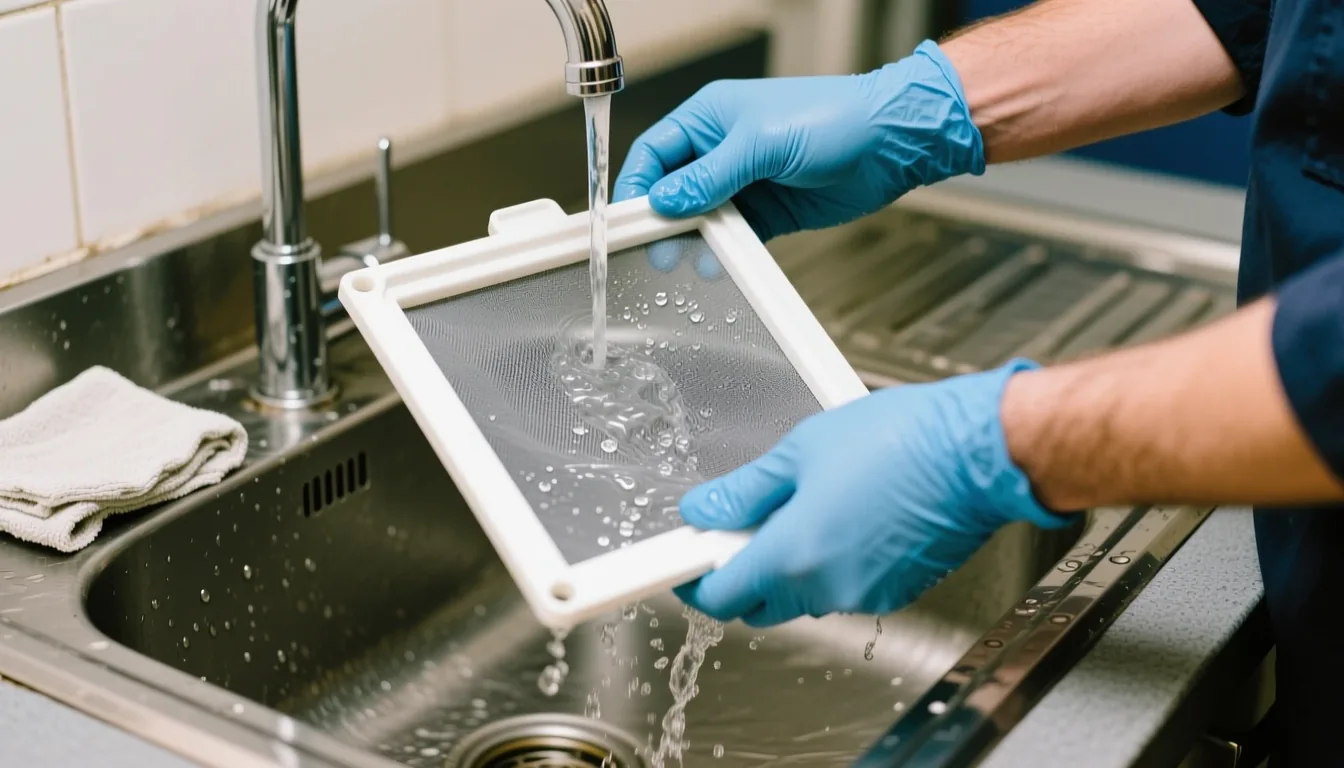
That timing matters, since it catches a problem early. It happens before the system faces its heaviest summer demand, not partway through a heatwave. Between visits, Daikin UK also suggests cleaning the filters every two weeks during heavy use.
Booking early also tends to mean a shorter wait for an appointment, before an engineer’s diary fills up. The same early-spring booking pattern applies to air conditioning servicing in Bristol.
A home office or a bedroom used for work can push a unit closer to year-round running. If a system runs for long stretches outside summer, treat it more like a commercial unit. Check with an engineer whether once a year is still enough. That is worth asking once the pattern of use has clearly changed.
A sunny second-floor bedroom can run harder than the rest of the house. That holds true while the rest of the system sits lightly used.
A holiday let
A holiday let brings a schedule of its own. While the system can sit idle for weeks over winter, it then runs hard through a string of back-to-back bookings in summer. A single annual service is usually enough.
Time it for a quiet gap between stays, rather than mid-season. A fault mid-booking is far more disruptive than one at home. As a result, that timing matters more here than the frequency itself. A managing agent who books cleans between stays can often fit the service visit into the same gap.
Offices and server rooms
An office system typically runs longer hours across more months than a home unit does. This is especially true where the building holds a lot of equipment or sees steady footfall through the working week. An annual service can still suit a smaller office with a modest heat load. Servicing a system in Plymouth follows the same running-hours logic for local offices.
Larger systems also carry a legal leak-check schedule. For example, some systems hold F gas equal to 5 to under 50 tonnes of carbon dioxide. Those need a leak check at least every 12 months. From 50 to under 500 tonnes, the check falls due at least every six months.
A system with an effective rated output above 12kW also needs an energy assessor’s inspection. Those inspections must be no more than five years apart. That inspection is separate from routine servicing, but the two can be planned together. It is also worth checking what certification an installer needs before booking either visit.
A server room sits at the far end of this scale. Its cooling system runs all year, whatever the weather outside, because the equipment inside needs a stable temperature. That constant load means a fault is rarely convenient, whatever time of year it strikes. Always-on cooling needs the same care wherever it runs, including maintenance visits in Bournemouth.
It can affect sensitive equipment fast if the temperature climbs even briefly. A system with no seasonal rest also has no quiet season for a service visit. Ask the engineer whether more than one visit a year suits the room.
A commercial kitchen
A kitchen is the hardest working environment on this list. Grease, steam and heat from cooking fill the air every trading day. Manufacturers already note that systems in dusty settings may need more checks. A kitchen’s airborne grease is a similar load on filters.
As a result, many kitchens are worth checking more than once a year. It can help to time visits alongside the kitchen’s own extraction maintenance. Pairing the two also means fewer separate call-outs to schedule around trading hours.
Workplace law adds a firm baseline. Under the Workplace Regulations 1992, mechanical ventilation systems must be kept in efficient working order and good repair. They must also be cleaned as appropriate.
It is worth booking the visit well ahead. Waiting for a quiet week that never comes only delays the problem. Meanwhile, the strain on the system keeps building.
What this means for your enquiry
Matching the schedule to how a system is actually used beats one rule for everywhere. By law, a leak found during a check must also be repaired as soon as possible. Our air conditioning servicing and maintenance service covers the South West, whatever the building type, including routine servicing around Bath.
If you are unsure which schedule fits your building, describe the system’s day-to-day pattern of use. That description is usually enough for an installer to suggest a sensible starting point.
A property with mixed uses can even need two different schedules under one roof. A home with a separate annexe let out is a common example. The two parts of the building rarely see the same amount of use.
One enquiry puts you in touch with one pre-qualified installer for this job. It is free, with no obligation.
Send your details through our contact page. The installer matched to your job can then recommend a schedule that fits your building’s day-to-day pattern — get in touch.