A typical single-room split system usually takes one working day to fit, sometimes two if the pipe run or access is hard. The full journey takes longer than that, though. A survey, any planning check and a supply lead time all happen first, before the installer even arrives on site.
The short answer
For a typical single-room split system, the fitting itself usually takes a day, and sometimes two. The full journey from first enquiry to a working system is longer, though. A survey, any planning checks and a supply lead time all happen before the installer even arrives on site.
Before the fitting starts: survey and planning
Every job begins with a survey by the installing engineer. The installer confirms where the indoor and outdoor units will sit. They also check how far the pipe run needs to travel, and what electrical work the job needs.
This step settles any planning question early. In England, permitted development covers air source heat pumps on houses and flats, within set limits. A cooling-only unit, however, sits outside that allowance. A listed building or a conservation area can need extra checks too.
Once the survey is done, there is usually a wait while the equipment is ordered in. That gap varies with the unit and how busy the season is. The installer can confirm it once the survey settles which unit you need. Air conditioning installation in Frome follows the same survey-then-order sequence before any fitting date is set.
Booking well before the busiest summer weeks tends to keep this whole pre-fitting stage shorter. Our guide to the best time of year to install air conditioning explains why. Both survey slots and fitting dates are easier to arrange outside the peak season.
The fitting itself: usually a day for one room
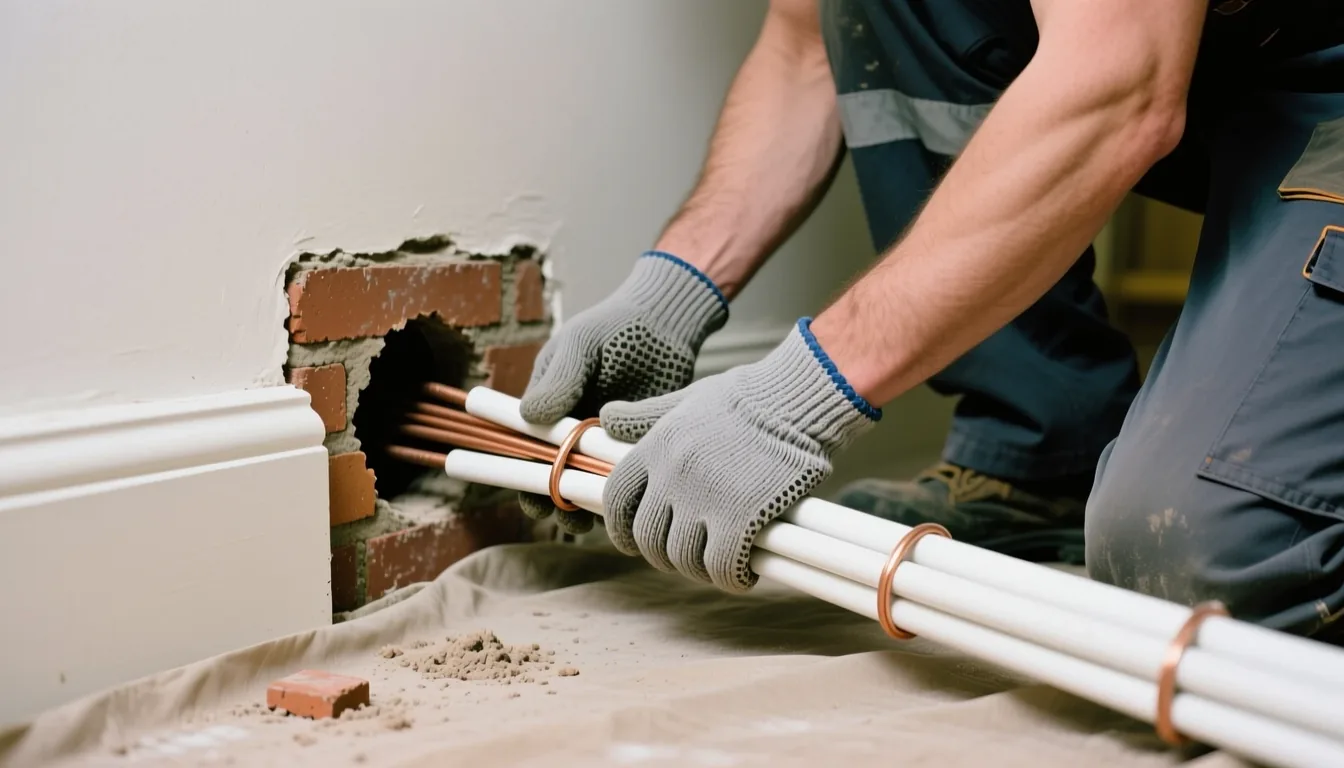
For a single-split system in an ordinary house, a standard fit usually takes one working day. The work covers mounting the indoor and outdoor units, drilling the wall and running the pipework and cabling between them. It also covers the condensate drain and the electrical connection. A second day, where needed, usually comes from a longer pipe run or harder access.
A straightforward job in an easily accessed room tends to sit at the shorter end of that range. So does a short pipe run to a ground-level outdoor unit. A trickier layout, such as a loft room or an upper-floor flat, can add time.
Access simply takes longer to arrange safely. A survey covering that access question is exactly what installing a system in Bradley Stoke begins with, too.
The electrical side can add a step too. In a home, installing a new circuit is notifiable work under Part P of the Building Regulations. Therefore, either building control is told before work starts, or a registered competent person self-certifies the job.
Commissioning and handover
Once the system is fitted, the installer commissions it. That means pressure testing and drawing air and moisture out of the pipes. The engineer then charges the refrigerant and checks the system runs properly.
UK law says only an engineer with the right F gas qualification may do that refrigerant work. A brief handover usually follows, covering the controls and basic day-to-day use.
Commissioning rarely adds much time to the overall project, since it happens straight after the fitting rather than as a separate visit. It is nonetheless a distinct step, so ask about it if a quote does not mention it clearly.
Our quote checklist lists the other details worth checking too. Larger systems also bring records. Where a system holds F gas equal to 5 tonnes of carbon dioxide or more, records must be kept for five years.
What stretches the timeline
A few things reliably add time beyond the typical single day. A multi-split system takes longer to fit than a single room. There is simply more pipework and more indoor units to connect. For instance, a two-room job typically takes a full day on its own.
Difficult access, such as scaffolding or a cherry picker for a high outdoor unit, adds both time and coordination. Yate air conditioning installation follows the same multi-room timeline for larger properties.
A planning check that needs a council’s input can add the most time of all. That step sits entirely outside the installer’s control, unlike a quick permitted-development confirmation. None of this makes a longer job a problem, only a different one. Knowing which of these applies to your property before work starts is the easiest way to plan around it realistically.
An older property can also raise its own timing questions, quite apart from planning rules. Solid stone or brick walls take longer to drill than modern block work. Unusual room layouts or an awkward loft space can slow the fitting further. None of this stops the job going ahead, although it does mean the survey stage matters even more than usual.
A single room against a whole house
A single-room installation and a whole-house project are different jobs, not just different sizes of the same one. Cooling one room usually means one indoor unit, one outdoor unit and one pipe run. That keeps the fitting close to the typical single working day.
Covering several rooms across a whole house usually means either several separate systems or one larger multi-split system. Either approach adds meaningfully more time on site. Anyone planning to cool a whole house in stages, room by room, should still mention that during the first survey.
An installer can then plan the pipework with future rooms in mind. That saves disruption later, even if only one room is fitted to begin with.
What this means for your enquiry
The clearest way to find out how long your own installation will take is a proper survey against your actual property. A general range is still only a guide, not a promise. Our air conditioning installation service covers homes and businesses across the South West, including air conditioning installation in Weston-super-Mare.
One enquiry puts you in touch with one pre-qualified installer for this job. It is free, with no obligation.
Send your property details through our contact page. The installer matched to your job can then give you a realistic timeline — get in touch.