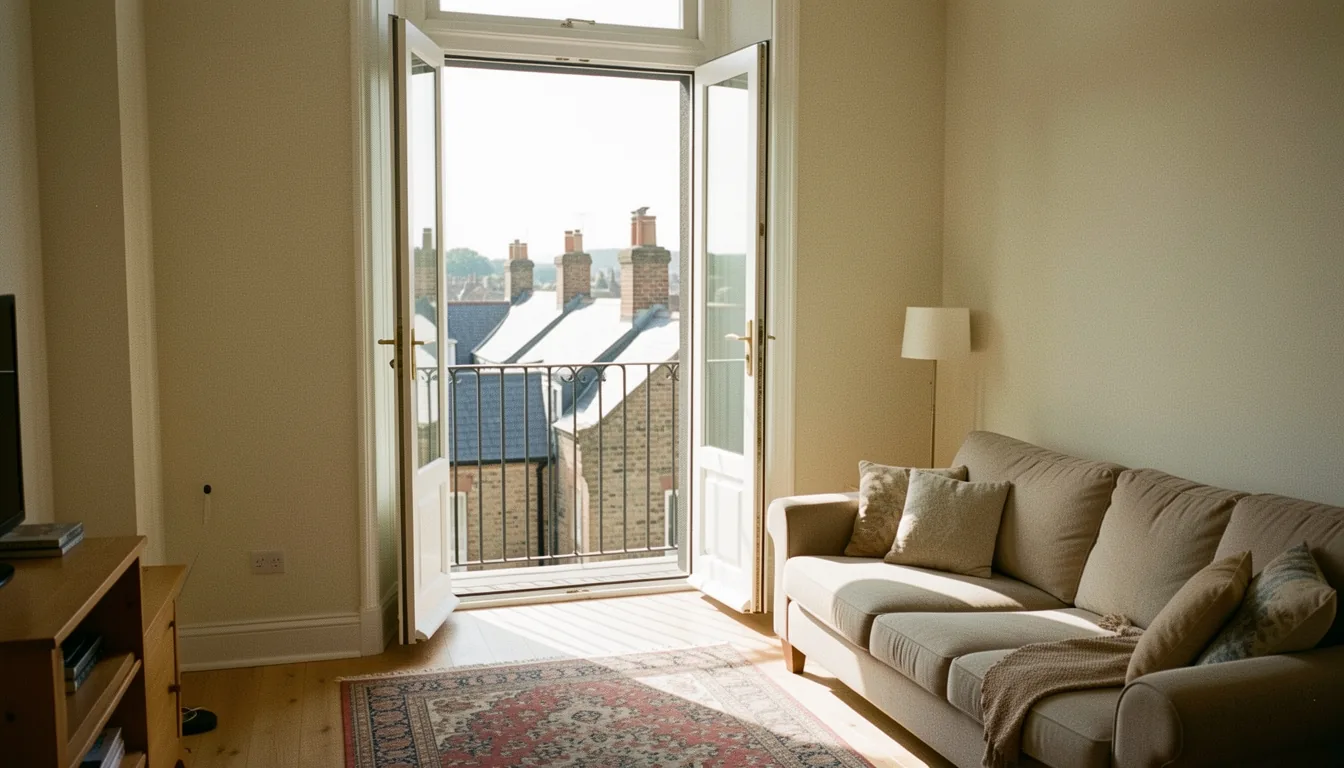
Yes, a flat can usually have air conditioning fitted, though it needs more steps than a house. Freeholder or landlord consent almost always comes first, since altering the building’s exterior needs written permission. Permitted development also covers only one small heat pump per block, so a cooling-only unit usually needs planning permission too.
Flats can usually have air conditioning, with the right sign-off first
Yes, a flat can usually have air conditioning fitted. However, a flat adds steps a house does not need. Consent from the landlord or freeholder almost always comes first.
The right spot for the outdoor unit also needs some thought. A flat rarely has a garden to tuck it into, so the options are more limited from the start.
Leaseholder and freeholder consent
Most flat leases say what a leaseholder may change without asking. Council leasehold guidance, for example, treats any change to the outside of a flat as needing written permission. It names items as small as a boiler vent or a satellite dish.
An outdoor air conditioning unit sits in the same group. That means asking the freeholder or the managing agent before any work starts, not after. A renter has an extra step again, because the lease and the tenancy are separate agreements.
The law gives leaseholders some protection here. Where a lease allows improvements with consent, the Landlord and Tenant Act 1927 says consent cannot be unreasonably withheld. Still, the landlord can ask for reasonable legal costs, and sometimes for the flat to be put back later.
Where the outdoor unit can actually go
A house usually parks its outdoor unit against a side wall or in a rear garden. A flat rarely has either option. Three spots come up most often instead.
A private balcony is one. A flat roof with safe access is another. A wall bracket is the third. The same siting question applies to air conditioning installation in Bournemouth for any flat without a garden.
A ground-floor flat sometimes has a small patio of its own. An upper-floor flat usually needs sign-off, since the fixing point sits on the shared structure. Similarly, a flat roof only works if access is safe and the roof can take the extra weight.
Planning rules for flats
In England, permitted development rules do cover a block of flats, but with tight limits. Part 14 Class G allows only one air source heat pump on a block of flats. That unit must be no larger than 0.6 cubic metres.
There are other conditions too. A unit used only for cooling does not count as permitted development. On a flat roof, it must sit at least one metre from the edge.
A listed block gets no permitted development rights for this at all. Meanwhile, in a conservation area, the unit cannot go on a wall or roof facing a road. Because every block differs, it is worth asking the local council before choosing a spot. Our planning permission guide covers the wider rules behind those limits, including how the conservation area condition works.
Condensate, noise and considerate siting
Every air conditioning unit makes a small amount of water while it runs. On a house, that usually drains onto a flower bed or a gravel strip. On a flat, it needs a proper route to a drain instead.
It should not run down a shared wall, or onto a balcony below. That detail is easy to miss, so raise it with the installer early.
Noise is worth thinking through too. For instance, a shared wall or a balcony above another window can carry sound further than on a detached house. Under permitted development, a heat pump must also meet the MCS sound standard, so position matters.
Sizing is a job for a proper survey
A flat is usually smaller than a house, yet a smaller unit is not always the right call. A top-floor flat under a warm roof can need more cooling than its floor area suggests. So can a flat with a lot of west-facing glass. A flat with more than one room needing cooling is also where the choice between single-split and multi-split systems starts to matter.
Since every flat’s layout, aspect and build differ, sizing by eye rarely works well. A proper survey, done in person, is the reliable way to match the unit to the room.
What to get in writing before work starts
A spoken “yes” from a freeholder is not worth much later on. Get consent in writing, even if it is only a short email that confirms the agreed spot. That record protects you if a dispute comes up months afterwards.
A managing agent often has its own form for outside changes, so ask for it early. Keep a copy of the agreement alongside your lease paperwork.
The cost of skipping this step can be high. For example, council guidance warns that a landlord can ask for unapproved work to be undone. It can also do the work itself and charge the leaseholder.
What this means for your enquiry
Tell us about the flat. Which floor it sits on matters, along with whether there is a balcony or a flat roof. Whether you own the lease or rent it also shapes what we pass on.
Our air conditioning installation service covers flats as well as houses. That holds for flats needing air conditioning in Plymouth and across the wider South West, including air conditioning installation in Weymouth.
One enquiry puts you in touch with one pre-qualified installer for this job. It is free, with no obligation.
Send those details through our contact page, including any consent you already have in writing. The installer who replies can talk through what is realistic for your building — get in touch. The same questions apply to a flat booked through air conditioning installation in Torquay.